Last Updated: July 28, 2026
A Kodiak Canvas 12x12 wall tent with a front awning just lit up r/BuyItForLife with more than 1,900 upvotes and a lively comment thread. The praise was near-universal: it is heavy, it is big, and it is "tough as nails" for a yearly week-long camping trip. But scroll past the top comment and you find the conversation every canvas owner eventually has, which is how do you actually keep gear like this alive for decades?
Finding the right sewing machine accessories for canvas comes down to matching the features to how you will actually use it.
That is where a lot of people get quietly nervous. Canvas is fantastic material, but it is thick, it stresses seams, and no manufacturer's stitching lasts forever under sun, wind, and repeated pack-downs. The owners who truly get a lifetime out of tents, awnings, tarps, and gear bags are the ones who learn to repair and reinforce them at home. And doing that on canvas is a completely different game than hemming a shirt.
This guide covers the sewing machine accessories that actually matter when your projects are heavy: canvas, webbing, leather patches, and multiple layers stacked at a seam. We focus only on the tools that survive that kind of work, and we are honest about where each one falls short.
The Short Answer
If you want to repair or build canvas gear, three accessories do the heavy lifting: a set of heavy-duty needles in sizes 90/14 through 110/18, a walking foot to feed thick layers evenly, and a cone thread stand so heavier thread pulls smoothly. Add Class 15 bobbins and an extension table for large panels, and a standard home machine can handle far more canvas than most people expect.
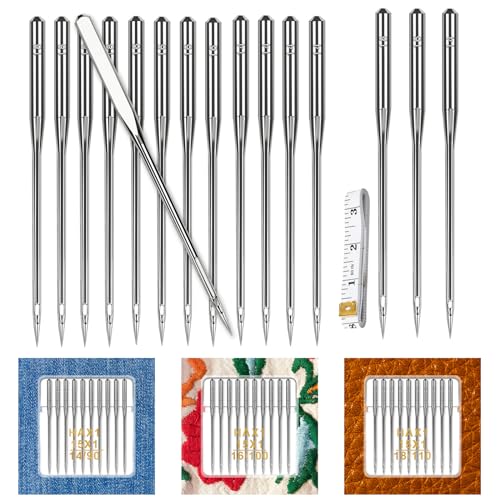
- Universal for Sewing Machine: Our sewing machine needles are suitable for most home sewing machines
- Heavy Duty Size: 30Pcs heavy duty sewing machine needles. 10pcs Size 90/14 for thin and thick fabrics (such as shirts, undershirts and autumn coat ); 10pcs Size100/16 for Thick
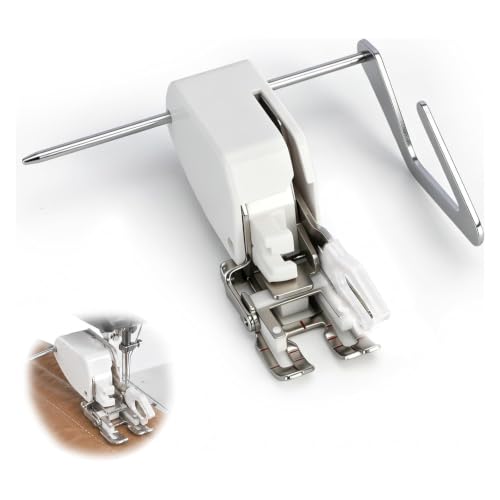
- EVEN FEED, NO SKIPPING STITCHES:Designed as a true walking foot even feed foot, this attachment feeds multiple fabric layers evenly to prevent shifting, puckering, or skipped
- HEAVY-DUTY PERFORMANCE FOR THICK FAB:Built with a durable metal bottom and strong feed mechanism, this walking foot sewing machine handles thick materials such as leather, denim
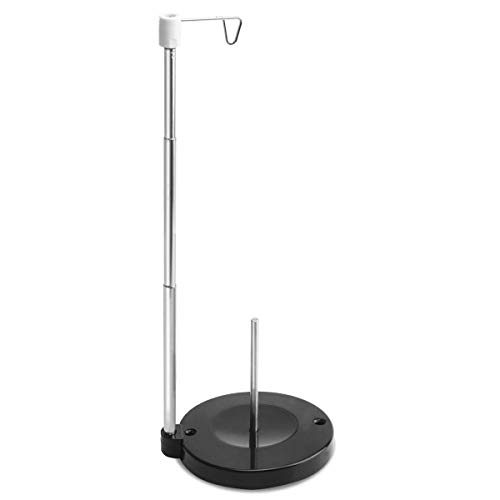
- Height Adjustable - The tall metal guide bar is height adjustable, helps to feed thread to your machine with machine’s special height requirements, which is nice to have
- Premium Quality and Appearance - Its elegant appearance will surely add a touch of beauty to your room, durable material is selected for the production, and the heavy base makes
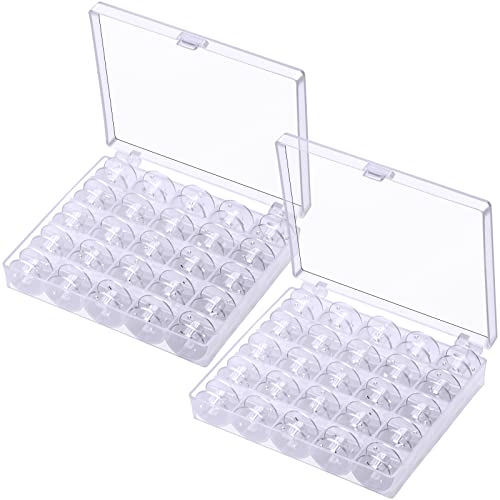
- 1. Packaging content: Each package includes 50 pieces of bobbins (The size :diameter 0.8 * height 0.45 inches) and 2 pcs storage boxes for added convenience. You don't have to
- 2.Standard size: Designed to fit most sewing machines, our standard-sized bobbins are perfect for both embroidery and sewing enthusiasts, whether you're a beginner or a seasoned
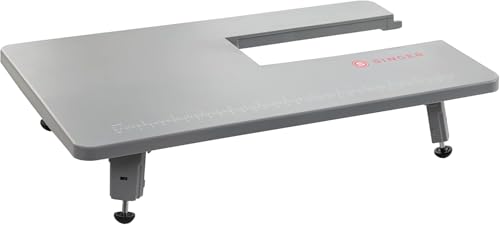
- EXTENSION TABLE FOR LARGE PROJECTS: Create professional sewing results with added workspace designed for quilting, home décor, and garment sewing. This sewing machine extension
- ENHANCED STABILITY & SUPPORT: Provides extra stability and balanced support when sewing quilts, curtains, and bulky fabrics. Reduces fabric drag and improves stitch accuracy
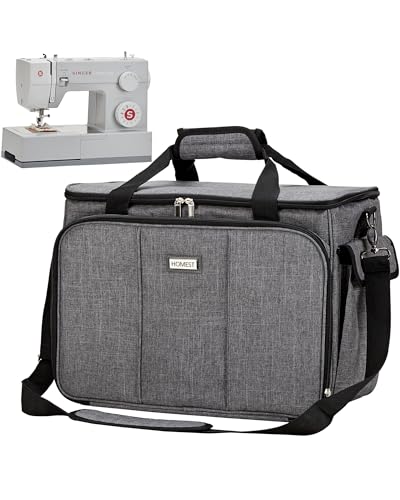
- GENEROUS STORAGE SPACE: Storing machines up to 17 x 8 x 12 inches. Spacey main compartment fits most standard sized sewing machines, compatible with SINGER, Brother and Janome
- PROTECT YOUR PRECIOUS MACHINE: Using well padded sidewalls, extra cushioned bottom and padded pockets, you can be assured that your sewing machine and accessories will stay
Why Canvas Breaks Ordinary Sewing Setups
Canvas is not just "thicker cotton." A wall tent, an awning, or a heavy tarp stacks multiple plies at every hem, corner, and pole pocket. Add webbing reinforcement or a leather patch and you can be pushing a needle through five or six layers at once.
Three things go wrong on a stock machine. The needle deflects or breaks because it is too fine. The presser foot drags on the top layer while the feed dogs pull the bottom layer, so the plies shift and pucker. And lightweight thread on a vertical spool pin snags and snaps when you ask it to do real work.
The good news from that Reddit thread is that owners are not throwing gear away. They are patching awnings, re-sewing pole pockets, and adding tie-outs. Every one of those jobs is achievable at home with the right accessories, and none of them require an industrial machine if you set up correctly.
The mindset shift
Treat canvas work like a small construction project. You are not trying to sew fast. You are trying to sew controlled, with the right needle, even feed, and thread that will not be the weak link in a seam that has to survive a windstorm.
The Best Heavy-Duty Sewing Accessories for Canvas
1. Heavy-Duty Needles (Sizes 90/14, 100/16, 110/18)
Nothing else matters if the needle is wrong. This 30-piece set covers sizes 90/14, 100/16, and 110/18, which is exactly the range you want for canvas, denim, leather patches, and embroidery-weight work on thick fabric.
The logic of having three sizes is simple. Use 90/14 for lighter canvas and single-layer repairs, step up to 100/16 for standard tent and tarp weight, and reach for 110/18 when you are punching through stacked plies, webbing, or a leather reinforcement. Matching needle size to the actual thickness in front of you is the single biggest predictor of whether a seam succeeds or snaps a needle.
A 30-count set also acknowledges reality: heavy fabric dulls and bends needles faster than quilting cotton, and a dull needle is what causes skipped stitches and puckering. Having spares means you swap at the first sign of trouble instead of fighting a worn point.
Trade-offs: These are described as universal needles for thick fabric, not specialty leather needles, so for dense leather patches you may still want a dedicated leather point. And with zero reviews at the time of writing, you are buying on the spec range rather than a long track record. The low price makes that an easy risk to take.
2. Walking Foot Attachment for Even Feed
If the needle is the most important consumable, the walking foot is the most important attachment. It adds a second set of feed teeth on top of the fabric so the upper and lower layers move together instead of shifting.
On canvas that is the difference between a flat, professional seam and a wavy, puckered mess where the top layer has crept ahead of the bottom. It also shines on quilting through batting and on leather, where a standard foot tends to stick and drag.
This model is an even-feed presser foot built for quilting, leather, and thick fabric, and it is described as compatible with Brother, Singer, and Janome low-shank machines. That covers a large share of the home machines people already own, which is why a walking foot is usually the first upgrade serious gear-repairers make.
Trade-offs: It is a low-shank attachment, so you must confirm your machine is low-shank before buying, and high-shank or specialty machines will not fit. Walking feet are also noisier and slower than a standard foot, and some do not accommodate certain decorative stitches. For straight-line canvas work, none of that matters.
3. Adjustable Cone Thread Stand
Heavy projects want heavy thread, and heavy thread usually comes on cones or large spools that will not sit on your machine's built-in spool pin. This is where a dedicated thread stand earns its place.
The Sew Tech adjustable cone thread stand is a single-thread stand with a large spool holder and a heavy plastic base for stability. It feeds thread upward and off the cone so the thread does not bind against the spool, which is the usual cause of tension spikes and snapped thread on big jobs.
The steady base matters more than it sounds. A tippy stand walks around your table and yanks the thread; a weighted one stays put and delivers a smooth, consistent feed for the long, continuous seams canvas repair demands. It also works across sewing, embroidery, quilting, and serger setups, so it is not a single-purpose purchase.
Trade-offs: It is a single-thread stand, so it will not serve a multi-needle or multi-cone workflow. It is also plastic rather than metal, which keeps the price friendly but means you should treat it gently. For one machine doing heavy work, it is exactly enough.
4. Class 15 Bobbins (50-Pack with Cases)
Thick seams eat bobbin thread quickly, and stopping mid-seam to wind a new bobbin is where mistakes happen. A generous bobbin supply is a small cost that removes a real annoyance.
This Eoehro set includes 50 plastic bobbins in the common Class 15 / SA156 size, packaged in two storage boxes. Class 15 is one of the most widely used home-machine bobbin standards, so the odds are good these fit the machine you already have (always confirm your manual specifies Class 15).
Having 50 on hand means you can pre-wind several bobbins of your heavy thread before starting a big awning or tarp repair and simply drop in a fresh one without breaking rhythm. The included cases keep them from becoming a tangled drawer mess.
Trade-offs: These are plastic, not metal, and a few machines specifically require metal bobbins, so check your manual first. Plastic bobbins are also lighter, which is fine for the vast majority of home machines. At this price, keeping a big stock is a no-brainer.
5. Snap-On Extension Table for Large Panels
Canvas panels are big, and the small bed of a home machine leaves most of that fabric hanging off the edge, dragging and distorting your stitch line. An extension table fixes the ergonomics of large work.
This SINGER extension table snaps on and adds a flat, supported surface with foldable legs for extra workspace, which the listing positions for quilting and large projects. That same extra real estate is exactly what you want when wrangling a tent wall or an awning panel through the machine.
Supporting the weight of the fabric on a flat surface keeps it from pulling as you sew, which directly improves stitch consistency on long seams. The foldable legs also mean it stores flat when you are done.
Trade-offs: It is designed around SINGER computerized heavy-duty machines, so fit is the key question for other brands; confirm compatibility with your specific model before buying. It is also the most expensive item here. If you mostly do small patch repairs, you may not need it, but for building or repairing full panels it is a genuine quality-of-life upgrade.
6. Padded Carrying Case for Portable Repairs
If your canvas gear lives at a cabin, a campsite, or a workshop that is not where your machine lives, a protective case turns your machine into something you can actually bring to the job.
The HOMEST carrying case is a universal padded tote with multiple storage pockets and a shoulder strap, described as compatible with most standard Singer, Brother, and Janome machines. The pockets are the useful part here: they hold the needles, bobbins, and walking foot from this list so your whole canvas-repair kit travels as one unit.
If you want a lower-cost or color option, the TLBTEK canvas carry totes cover the same idea in black or rose red. Both are padded storage covers with pockets, so pick on budget and preference.
Trade-offs: These are universal totes, so an oversized or unusually shaped heavy-duty machine may not fit; check your machine's dimensions against the listing. A soft case also offers less crush protection than a hard case. For transport and dust protection, it does the job well.
Who This Is For
The BuyItForLife camper
You own gear like that Kodiak wall tent and you intend to keep it for decades. Your jobs are repairs and reinforcements: a torn awning, a stressed pole pocket, a new tie-out, a patched grommet corner. Your core kit is the heavy-duty needle set, the walking foot, and a big stock of bobbins. The extension table helps when you are working a full panel.
The DIY outdoor maker
You do not just repair, you build: custom tarps, gear bags, tool rolls, dog beds, boat covers. You are running heavier thread on cones, so the thread stand is essential, and the extension table pays for itself the first time you feed a large panel. You will cycle through all three needle sizes depending on the layer count.
The mobile or cabin sewist
Your projects are not near your primary machine. You need to bring the machine to the gear, whether that is a campsite, a cabin, or a garage workbench. A padded carrying case with pockets lets you pack the machine plus your needles, bobbins, and walking foot as one grab-and-go kit.
What to Look For
Match the needle to the fabric, not the other way around
The needle number describes its thickness. Higher numbers are stronger and are meant for heavier, denser fabric. For canvas you generally live in the 100/16 to 110/18 range, dropping to 90/14 for lighter single-layer work. Buying a set that spans the range is smarter than betting on one size.
Swap needles often. Heavy fabric dulls points quickly, and a worn needle causes skipped stitches and puckering long before it visibly looks bad.
Even feed is non-negotiable on thick layers
The most common failure on canvas is layer shift, where the top ply creeps ahead of the bottom. A walking foot solves this by driving both layers together. If you buy one thing beyond needles, buy this. Just confirm the shank type: most home machines are low-shank, but verify before you order.
Feed your thread from the right place
Heavier thread on cones and large spools does not behave on a small vertical spool pin. A weighted thread stand that pulls thread up and off the top of the cone prevents the tension spikes that snap thread mid-seam. Stability of the base is what separates a good stand from a frustrating one.
Confirm bobbin class and material
Bobbins are not universal. Class 15 (also labeled SA156) is one of the most common home-machine sizes, but your manual is the authority. Also check whether your machine requires metal bobbins specifically; many accept plastic, but a few do not.
Support the weight of large fabric
Big panels dragging off the machine bed distort your stitch line. An extension table gives the fabric a flat surface to rest on so gravity stops fighting you. Compatibility with your specific machine model is the deciding factor here.
Value comes from durability and fit, not price
For this category, the cheapest useful upgrades (needles and bobbins) deliver the biggest jump in results. The higher-cost items (walking foot, extension table) are worth it only if they fit your machine, so verify compatibility before spending. A part that does not fit is the worst value of all.
What We Don't Recommend
Skipping the needle upgrade to save a few dollars
People try to sew canvas with the fine universal needle that came in the machine, then blame the machine when the needle breaks or the stitches skip. The needle set here costs less than a coffee run. It is the first thing to buy, not the last.
Buying a walking foot without checking shank type
The single most common return in this category is a low-shank foot ordered for a machine that is not low-shank. Read your manual or measure before you buy, and confirm your brand is on the compatibility list.
Assuming any bobbin fits
Buying the wrong bobbin class, or plastic bobbins for a machine that demands metal, causes tension problems that people mistake for a broken machine. Confirm Class 15 and your material requirement first.
Overspending on an extension table you do not need
If your work is small patch repairs, the extension table is a want, not a need. Spend that money on needles, bobbins, and a walking foot first, and add the table only when you are regularly feeding large panels.
Cheap thread as a false economy
A seam is only as strong as its weakest strand. Setting up a thread stand and then running brittle bargain thread through it undoes the point of the exercise. Match thread quality to the fact that this gear has to survive wind and weather.
Frequently Asked Questions
Can a regular home sewing machine actually sew canvas?
Yes, within reason. A standard home machine can handle a lot of canvas repair and even construction if you use the right needle (100/16 to 110/18), add a walking foot for even feed, and sew slowly. Where home machines struggle is very thick stacked layers or heavy webbing at a corner, where an industrial machine has the advantage. For most tent, awning, and tarp work, a well-equipped home machine is enough.
What needle size should I use for a canvas tent or awning?
Start with 100/16 for typical canvas weight and step up to 110/18 when you are going through multiple plies, webbing, or a leather reinforcement. Drop to 90/14 for lighter, single-layer canvas. Having all three sizes on hand lets you match the needle to the exact thickness in front of you.
Do I really need a walking foot?
For thick or layered fabric, it is the upgrade most likely to transform your results. It feeds the top and bottom layers together so they do not shift, which prevents the puckered, wavy seams that plague canvas work. Just confirm your machine is low-shank and on the compatible brand list before ordering.
Why does my thread keep snapping on heavy projects?
Often it is the thread feed, not the machine. Heavier thread on cones binds on a small vertical spool pin, causing tension spikes that snap the thread. A weighted cone thread stand that pulls thread up and off the top of the cone usually fixes this. Also check that your needle is large enough and not dull.
How do I know which bobbins fit my machine?
Check your machine's manual for the specified bobbin class. Class 15 (also called SA156) is one of the most common sizes, but it is not universal. Also confirm whether your machine accepts plastic bobbins or specifically requires metal, since a few models will not run correctly on plastic.
Is it worth repairing canvas gear instead of replacing it?
For quality canvas, almost always. That is the entire spirit of the BuyItForLife discussion: well-made gear is designed to be maintained. A patched awning or re-sewn pole pocket costs a few dollars in materials and can add years of life to a tent that would cost hundreds to replace.
The Bottom Line
The Reddit love for that Kodiak wall tent is really love for gear that lasts, and lasting gear needs an owner who can fix it. You do not need an industrial machine to keep canvas alive. You need the right needles, even feed, smooth thread delivery, plenty of bobbins, and enough table to support the fabric.
Start small: the heavy-duty needle set and a big pack of bobbins cost almost nothing and immediately expand what your machine can do. Add the walking foot next, then the thread stand and extension table as your projects grow. Set up that way, your sewing machine becomes the tool that turns a tough tent into a lifetime one.
Key Takeaways
- Choosing the right sewing machine accessories for canvas means matching the key features to your specific needs and budget
- Read real customer reviews and check the return policy before you commit
- Also covers: heavy duty sewing machine needles
- Also covers: walking foot for thick fabric
- Also covers: sewing canvas tents
- Compare value across models — the priciest option is not always the best fit